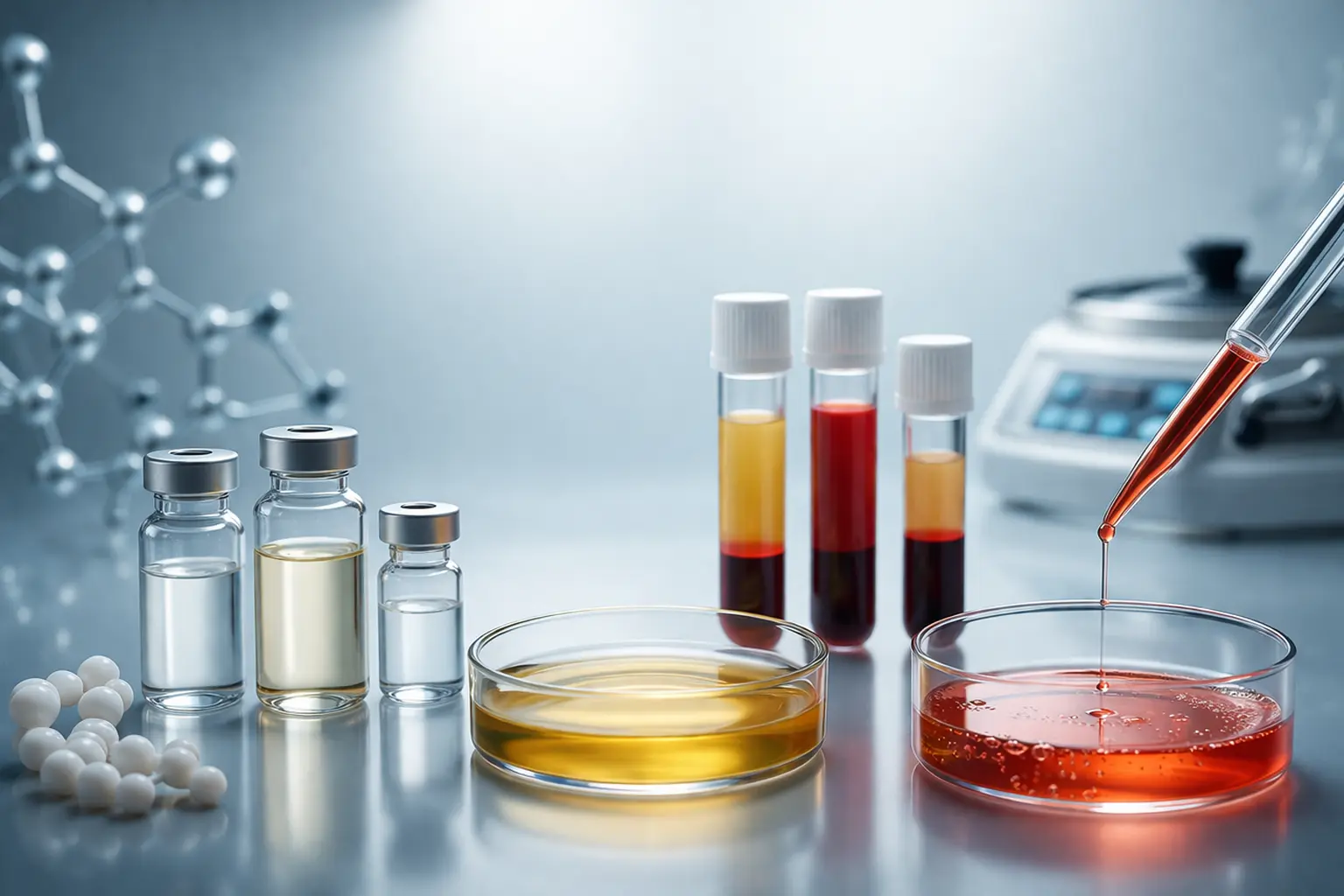
Regenerative medicine focuses on enhancing the body's own ability to repair and restore tissue. Two increasingly utilised modalities in this space are Platelet-Rich Plasma (PRP) and therapeutic peptides. In this article I will focus particularly on BPC-157 and TB-500 (Thymosin Beta-4) as these two are peptides I commonly use and I am finding great success with.
What is Platelet-Rich Plasma (PRP)?
PRP regenerative therapy is a treatment derived from your own blood. Following a blood draw, then centrifugation, a concentrated layer of platelets is made. This is the layer I am most interested in and will draw up and use to inject into various injured joints. These platelets release a range of bioactive growth factors and these include:
- Platelet-derived growth factor (PDGF)
- Transforming growth factor beta (TGF-β)
- Vascular endothelial growth factor (VEGF)
These specific factors contribute to:
- Tissue regeneration
- Angiogenesis (new blood vessel formation and therefore increased blood and oxygen flow to tissues to help with healing)
- Collagen synthesis
- Modulation of inflammation
PRP is widely used in musculoskeletal medicine, dermatology, and aesthetic treatments to support healing, recovery, and tissue quality. I have also seen great results when a patient's PRP is injected intravenously to assist with chronic inflammation, and I have seen improvement in autoimmune conditions as a result. This is obviously patient specific and results can vary.
Now What is the Deal with Peptide Therapy?
Peptides are short chains of amino acids (which make up proteins) that function as biological signalling molecules. These then can influence cellular processes such as repair, inflammation, and regeneration.
Therapeutically, specific peptides can be used to enhance recovery and optimise tissue healing. There are tons of peptides, but for the purpose of this article, I am going to focus on TB500 and BPC 157, which work so well with PRP therapy.
Let's Start with BPC-157 (Body Protection Compound)
BPC-157 is a synthetic peptide derived from a naturally occurring protein made in your stomach. It has been studied for its potential role in tissue repair and vascular modulation.
Key mechanisms include:
- Promotion of angiogenesis (new blood vessel formation) via upregulation of VEGF
- Enhancement of microvascular circulation at injury sites (promoting increased blood flow and therefore healing)
- Acceleration of tendon, ligament, and muscle healing
- Anti-inflammatory and immuno-modulatory effects
- Support of gastrointestinal mucosal integrity (gut health)
BPC-157 appears to exert a targeted, localised healing effect, particularly in damaged or inflamed tissue.
Now What About TB-500 (Thymosin Beta-4)
TB-500 is a synthetic analogue of Thymosin Beta-4, a peptide involved in cellular repair processes.
Its primary actions include:
- Promotion of cell migration to sites of injury (movement of cells)
- Support of angiogenesis (new blood vessel formation)
- Regulation of the actin cytoskeleton (important for cell movement and structure)
- Reduction of inflammation
- Enhancement of tissue flexibility and recovery
Unlike BPC-157, TB-500 seems to have a more systemic distribution, supporting broader regenerative processes.
Combined Approach: PRP + Peptides
The combination of PRP and peptide therapy may offer a synergistic effect:
- PRP delivers concentrated growth factors directly to the site of injury
- Peptides enhance cellular signalling and systemic healing responses
This integrative approach is increasingly used in:
- Tendon and ligament injuries
- Joint conditions
- Muscle recovery
- Regenerative and aesthetic medicine
- Chronic inflammation
Considerations
- Certain peptides, including BPC-157 and TB-500, are not yet widely approved by major regulatory authorities and may be used off-label.
- While there is growing interest and promising research in this field, particularly for peptides such as BPC-157 and TB-500, much of the evidence remains preclinical, with limited large-scale human studies available.
- We use peptides cautiously and conservatively on a case-by-case basis to boost the immune system and heal injuries.
- We are unsure of the long-term effects of peptide therapy.
- Outcomes may vary between individuals, and these treatments are not intended to replace standard medical care.
- Treatment should always be individualised and medically supervised.
- Both BPC-157 and TB-500 are prohibited by the World Anti-Doping Agency (WADA).
PRP and peptide therapy represent a shift toward biologically driven, regenerative treatments, aiming not only to alleviate symptoms but to restore tissue function and optimise recovery.
*This is not individualised medical advice. This is for educational purposes only.*
References
- Marx, R.E. (2004) 'Platelet-rich plasma: evidence to support its use', Journal of Oral and Maxillofacial Surgery, 62(4), pp. 489–496.
- Andia, I. and Maffulli, N. (2013) 'Platelet-rich plasma for managing pain and inflammation in osteoarthritis', Nature Reviews Rheumatology, 9(12), pp. 721–730.
- Fitzpatrick, J., Bulsara, M. and O'Donnell, J. (2017) 'The effectiveness of platelet-rich plasma in the treatment of tendinopathy: a meta-analysis', The American Journal of Sports Medicine, 45(1), pp. 226–233.
- Sikiric, P. et al. (2022) 'Stable gastric pentadecapeptide BPC 157: mechanisms and therapeutic potential', Journal of Physiology and Pharmacology, 73(1), pp. 1–10.
- Goldstein, A.L. et al. (2022) 'Thymosin beta-4: biological properties and clinical applications', Annals of the New York Academy of Sciences, 1515(1), pp. 5–15.
- Sosne, G. et al. (2004) 'Thymosin beta-4 promotes corneal wound healing and modulates inflammation', Journal of Cellular Physiology, 198(3), pp. 409–416.
- Philp, D. et al. (2004) 'Thymosin beta-4 promotes angiogenesis, wound healing, and hair follicle development', The Journal of Immunology, 172(7), pp. 4573–4580.